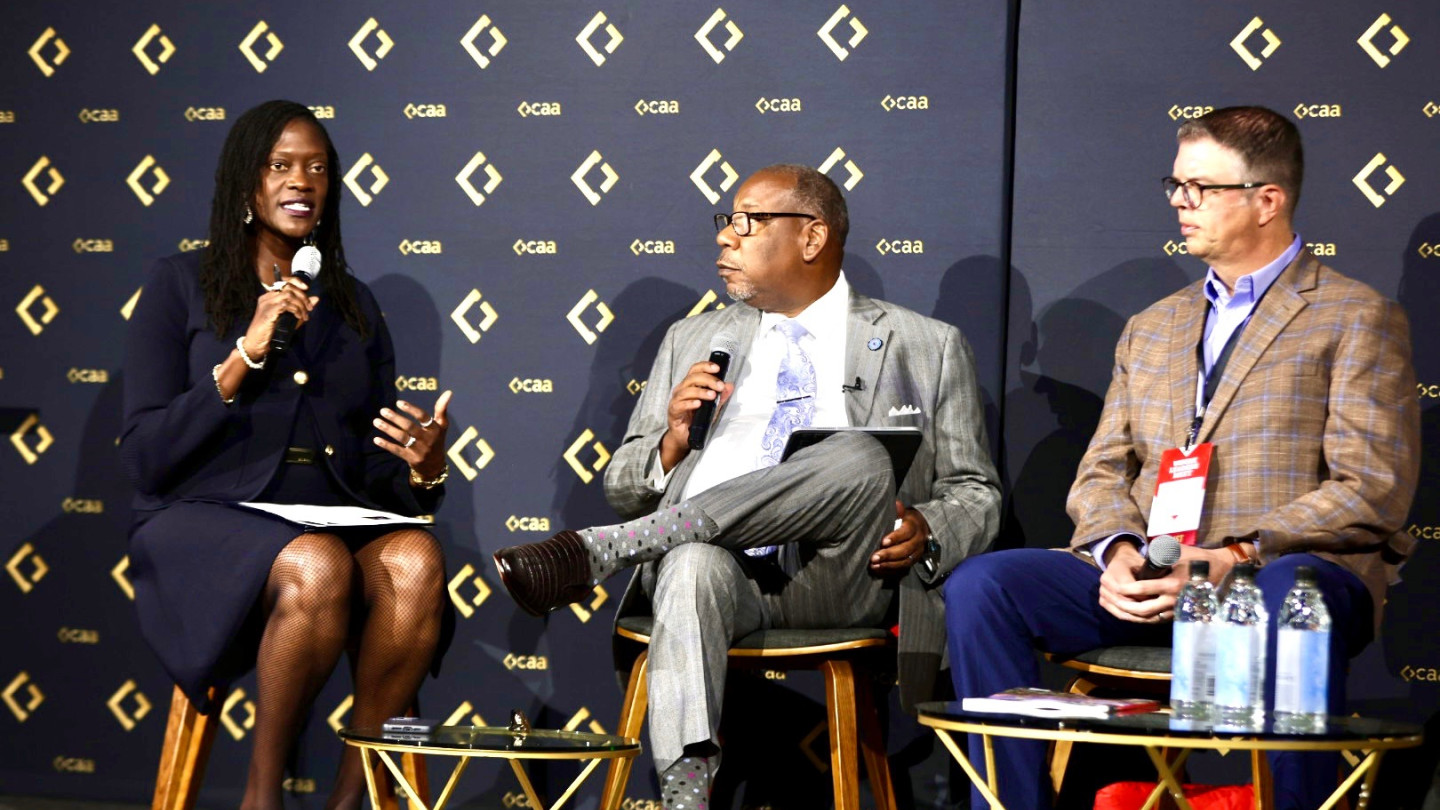

CHARLOTTE, N.C./ Sept. 24, 2026 - It was a rainy Thursday in September. Leaders in business, healthcare, and education descended on Blume Studios for Invest: Charlotte 2026. Johnson C. Smith University President Valerie Kinloch, Ph.D. ’96, served as moderator for the second panel of the day, “Leveraging the Development of Charlotte’s Anchor Institutions for Long-Term Growth.” A panel of experts broached topics of risk and resilience, investment and impact.
Throughout the conversation, Kinloch connected the work of the disparate group of leaders in higher education, healthcare, and construction, posing the question: How can Charlotte’s rapid expansion create lasting opportunity for its people: newcomers, students, and long-term residents. The assembled panelists dove right in: Dr. Anthony J. Davis, President, Livingstone College; Gary Paxson, President and CEO of UNC Health Blue Ridge; Kim Fish, Assistant Vice President of project and construction management at Flagship Healthcare Properties; and Chris Socha, a project executive at Charlotte-based Edifice.
President Kinloch’s exploration began at the core, asking, “What makes a college, hospital or healthcare system an anchor institution, and what does it owe the community around it?”
Dr. Davis offered perspective on the economic impact of higher education institutions in North Carolina, particularly HBCU’s. For example, JCSU and Livingstone together create approximately 1,300 jobs, he explained, to generate more than $160 million in economic impact. Still, according to Davis, the role of HBCUs extends beyond employment and spending. Anchor institutions like JCSU and Livingstone help “stabilize, catalyze, and revitalize” communities. Kinloch underscored the point, arguing the two HBCUs “are economic drivers of not just our local communities, but also of the region,” she said.
Kinloch took the question of impact across industries, shifting the discussion from institutional growth to the people needed to sustain it. “What can we all do to build a deeper talent pool?” Paxson first characterized the problem: potential workforce shortage, aging population, high expectations from patients in the era of AI and Amazon. Fish framed a plausible solution: healthcare institutions soon will meet patients where they live via micro-hospitals, drive-by medical offices, and mobile services. Socha captured the ripple effect whereby each new facility creates demand for construction workers and clinicians.
Some of this is already in motion. Fish pointed to the Healthcare Career Collaborative of Charlotte, which introduces students and mid-career job seekers to professional opportunities in architecture, engineering, construction, real estate and healthcare development through networking events, shadowing opportunities and scholarships.
Socha urged builders to reach prospective workers early, including through community training organizations. Large healthcare projects, he noted, require tradespeople, foremen, superintendents and project managers. Looking ahead, he hopes Charlotte can develop more of that expertise locally, allowing employers to hire graduates who already call the city home.

President Kinloch poses with the full panel after the event. ltr: Dr. Valerie Kinloch, Dr. Anthony J. Davis, Gary Paxson, Kim Fish, Chris Socha and Abby Lindenberg (founder and CEO of caa)
Kinloch brought the idea back to HBCUs. How, she asked Davis, can collaboration and innovation expand access to opportunity? Davis urged employers to see colleges as partners in developing their future workforce. “Today’s HBCU, we’re going out with our arms open,” he said. He pointed to Livingstone’s Career Relevance Institute as a way to shape curricula with industry and called on employers to invest in students already in the region. “It’s easier to keep them here than to bring someone else here.”
As the discussion turned toward the next 10 years, Kinloch asked each panelist to imagine the impact they hoped to leave on Charlotte and the Carolinas. Panelists offered this: increased accessibility, technological advancement, coordination with builders, greater community impact.
Kinloch’s closing remarks gave those ambitions a common direction. Institutions must create high-quality internships and hands-on learning opportunities, she said, while mentoring students toward careers of impact. A strong workforce cannot be developed overnight; it requires sustained investment in human beings and communities. She described the approach as “competitive collaboration.” Charlotte’s growth, Kinloch argued, will be strongest when its anchors work together to cultivate talent and extend opportunity across the region.