A 2024 Lyceum Event “A Community Renaissance”
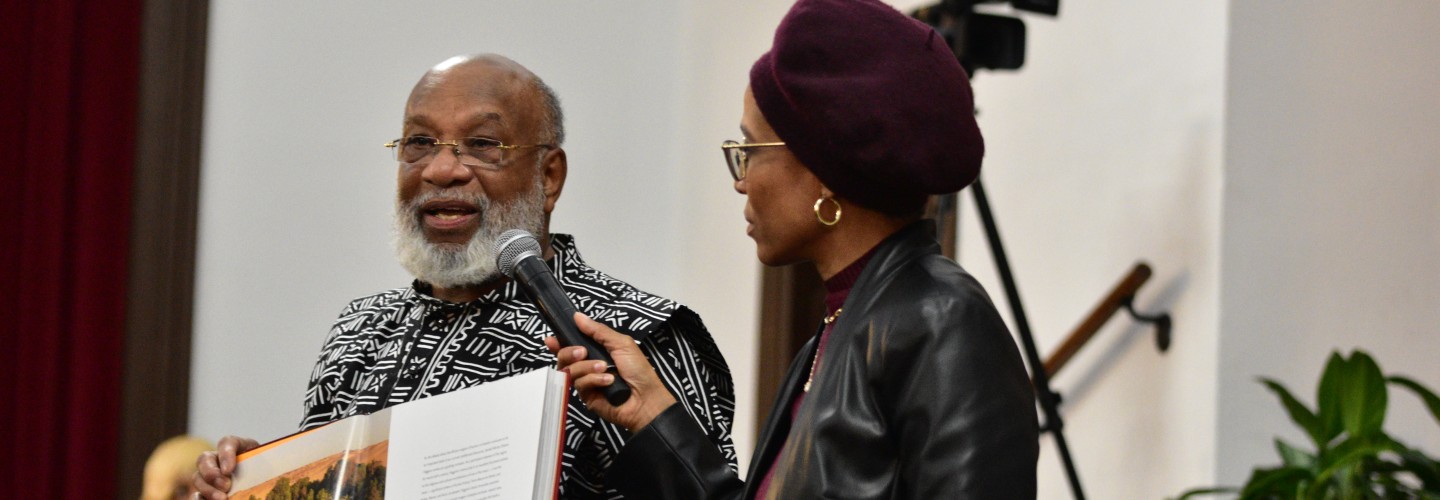
CHARLOTTE, N.C./Feb. 12, 2024 - “The photographer must be sympathetic to the object of the lens,” legendary New York Times photojournalist Chester Higgins Jr. says he strives to re-educate the world about the cultural contributions of Black people, from the Americas to Africa.
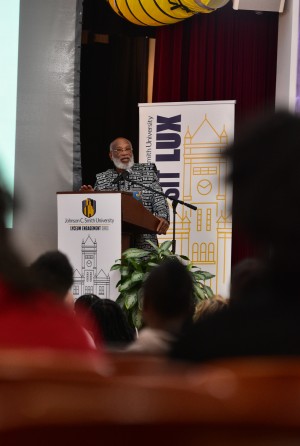
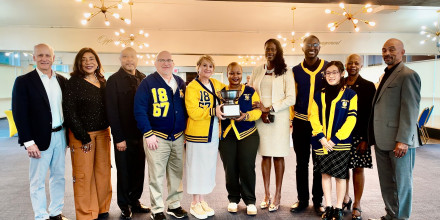
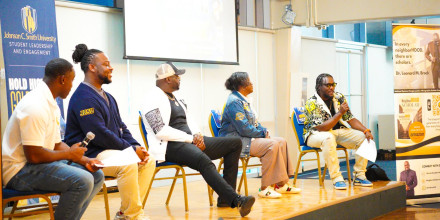
The celebrated artistic genius and public intellectual, shared his talents with the Johnson C. Smith University community Feb. 8, 2024, during the Let There Be Light Lyceum, “A Community Renaissance.” During the poignant event held inside Gambrell Auditorium, JCSU President Valerie Kinloch offered words of appreciation and inspiration, alongside Chairman of the Board of Trustees Steven Boyd and Provost Thierno Thiam.
For Higgins, the professional journey that spans five decades began when he picked up the camera to express love for family members. Over time, the prolific artist says he wanted “to change the negative images of people of color in media.” With a heart for history and a discerning eye for the visual aesthetic, Higgins set out to change perceptions of blackness around the world.
Over the course of nearly four decades at The New York Times and five decades as a photographer, Higgins set out to explore the bounty and brilliance of Africa. He was able to, "identify the physical footprints that tell the complete story." By capturing photographs of pyramids and mummies, the towering buildings and Ethiopian queens, Higgins captured the, "visual evidence [that] puts the ground under your feet in a firm way." Higgins' vision is made clear in his most recent book, Sacred Nile.
Student leaders Amara Turner and Kevin Hewitt paid tribute to Higgins from the podium during the event. The JCSU football team and students in the new JCSU Honors Program were acknowledged in the crowd. All gathered there watched and listened to the wise scribe in action.
"Culture determines what you become in the future," Higgins declared.
The scholar photographer teaches as he remembers. On Higgins’ big screen we see ancient architecture still-standing, storing mysteries still unsolved. Our eyes peruse the images: Queens Nefertiti and Nefertari appear regal and unrelenting. Through Higgins' eyes we see: "Now it is my responsibility to see how I can be great, because the history was great."
In ancient Egyptian royal tombs there are two conversations, he says. In the private tombs, "it is a conversation with memory: who was I and what did I do." In contrast, “the royal tombs are full of writings, but they are mythological - no photos of their family." Photograph by photograph, country by country, Higgins pulls together a psychological composition of a people for the JCSU crowd.
“Our history does not begin in slavery,” he said. “Slavery was an interruption in our rich history.”
The story is still being written, catalytic moments captured in stills.