- Careers grow through curiosity, preparation and a willingness to learn.
- Strong performance and meaningful relationships help open doors.
- Campus leadership provides experience students can carry into professional life.
- Confidence, boundaries and self-care help sustain success.
CHARLOTTE, N.C. / SEPT 22, 2026 - Success rarely begins with a complete plan. For students who attended Johnson C. Smith University’s Leadership and Legacy Panel in September 2026, the more useful starting point was learning how to prepare for the professional labyrinth ahead, and how to recognize opportunities, and pursue them full-throttle.
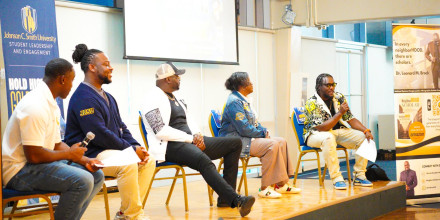
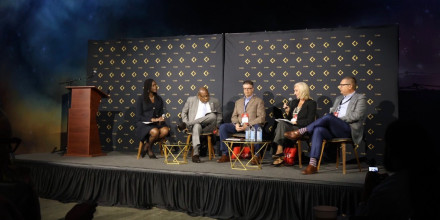
The distinguished panel, moderated by JCSU Board of Trustees Chairman James Ely III ’88, featured trustees Kieth Cockrell, Janice Dupré and Christy Bryant ’75; Board of Visitors member Sharene Pierce; and former Miss JCSU and 2022 valedictorian Alexys Gabriel ’22. Anthony Brown, Director of Student Engagement, gave an enthusiastic introduction, welcoming an exchange that connected seasoned corporate and community leaders with aspiring professionals in the JCSU community.
During the discussion, Chairman Ely, who has held executive leadership roles at companies like Johnson & Johnson & Procter & Gamble, encouraged students to grow beyond their initial career goals and expectations. Ely shared his personal journey, describing how he studied accounting before moving into sales and customer development as a C-Suite Executive. Pierce trained in chemical engineering, then developed the technical and interpersonal skills that helped her move into corporate leadership. Their experiences illustrated how education prepares graduates for opportunities they may not yet imagine.
“The point is not to be an accountant,” Ely said. “It is to be trainable.”
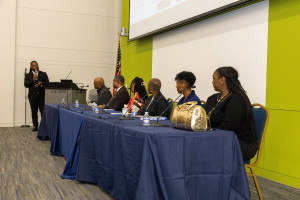
Trustee Cockrell recalled entering college without a clear professional goal, but with a strong work ethic his parents modeled. Curiosity helped him build on that foundation. “I wanted to learn. I wanted to be challenged,” he said. This insatiable thirst for exploration continues for Cockrell to this day, he said. It explains the longevity of his career as President of Bank of America Charlotte.
That readiness, Cockrell shared, matters when others begin recognizing potential. As Ely guided the discussion toward mentorship and sponsorship, Trustee Bryant, a retired Vice President at Wells Fargo, explained how professional relationships can extend one’s reach. Dupré, Executive Vice President of HR at Lowe’s, emphasized that such advocacy carries responsibility: “A sponsor is someone who supports you and speaks on your behalf when you are not in the room.” Mentees must come prepared to contribute, and those receiving sponsorship must deliver results.
Gabriel, an early careers recruiter for Equitable, brought those lessons into students’ lives. While serving as Miss JCSU, she attended a UNCF event involving Equitable, met professionals, and participated in an elevator pitch competition. Those connections helped launch her career, demonstrating how seriously embracing a campus role can create opportunities beyond graduation.
“Take your leadership roles very seriously,” Gabriel said. “Network and connect.”
Now in her role as recruiter, Gabriel looks for candidates who are intentional, informed and memorable. She encouraged students to research employers and build conversations that reveal their preparation and interests. But she also acknowledged that entering a professional environment can test confidence. After virtual internships during the pandemic, she worked to build connections and find her support system within the labyrinth.
“Your village may not look like you,” she said. “You have to find people you connect with.”
JCSU Student Government Association President, Islaea Anderson, raised a question about imposter syndrome, underscoring the idea that preparation and aptitude do not always erase uncertainty. Cockrell urged students to value the experiences that distinguish them, while Dupré encouraged students to remain grounded in their identities, particularly in workplaces where few colleagues look like them.
“You are supposed to be in the room,” Dupré said. Addressing fear of failure, she encouraged students to give themselves space to develop. “Every day success is getting up and doing my best,” she said. “Give yourself room to be great.”
Pursuing growth also requires judgment about what to accept. JCSU student leader, Suraya Hodges, inquired about how to achieve balance and recognize limits on campus involvement. Pierce, an executive at Duke Energy, offered a pointed answer. “Stop saying ‘yes’ immediately.” Bryant emphasized personal agency, and Ely encouraged conversations about workloads and priorities. They encouraged students to strike a balance between ambition and boundaries. Pierce also reminded students that rest, nutrition and community support are essential to maintaining the energy corporate responsibilities demand.
As students plan for a vibrant professional future, the panel offered concrete action steps they could begin now: 1) Learn in the classroom and in professional communities 2) Find a mentor and a sponsor 3) Bring something unique to the table; give as you receive 4) Clarify goals and execute 5) Strike a balance between hard work and self-care. Dupré expressed the value of that daily effort: “Put in the work today that will pay off later.”
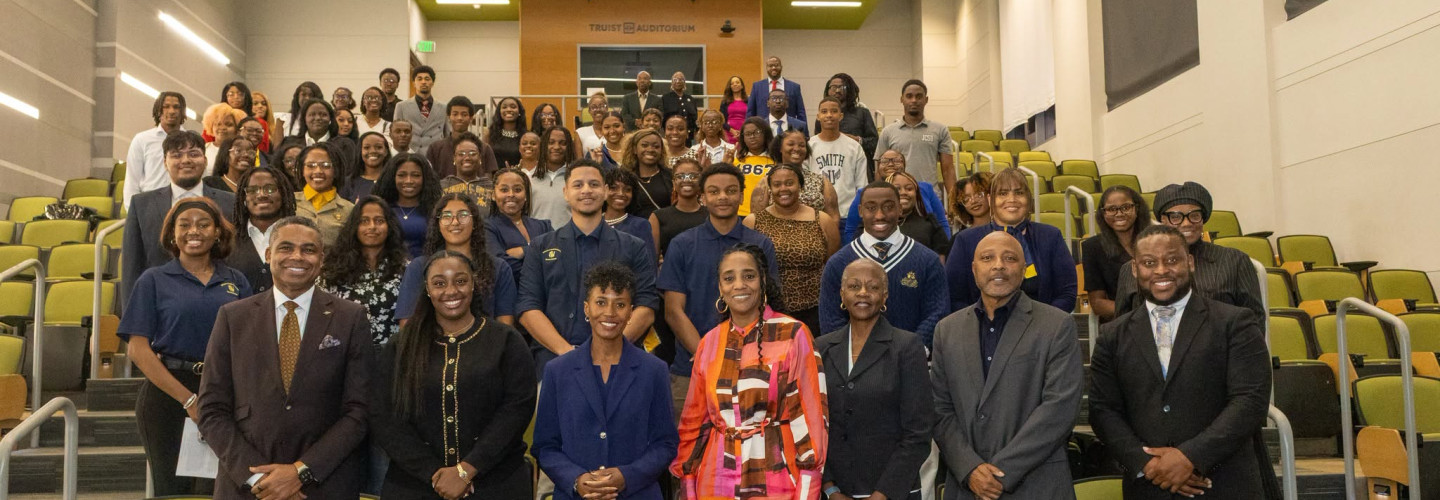
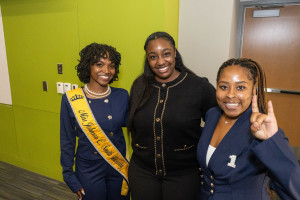
In the event’s denouement, students clamored for photos with the executives. They heard the message and seized the day, grabbing one-on-one conversations with our community’s top corporate leaders.