Charlotte, N.C./Sept. 22, 2022 – Three Johnson C. Smith University professors joined dozens of other teaching professionals at the National Humanities Center this past summer to advance research and teaching in their respective fields.
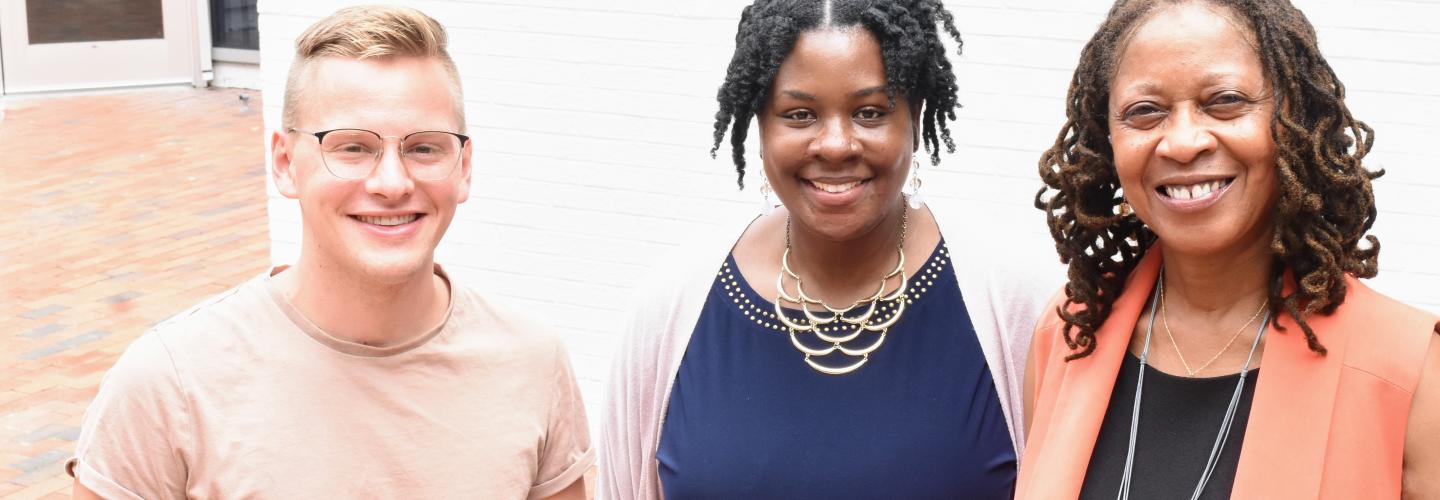
Dr. Debra Terrell, associate professor of Psychology; Dr. Felesia Stukes, assistant professor of Computer Science; and Dr. Tyler Bunzey, visiting assistant professor of Cultural Studies all participated.
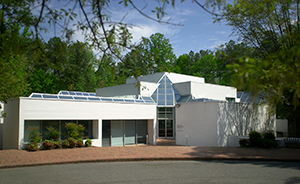
The National Humanities Center, located in Research Triangle Park, N.C., is dedicated to providing resources that can help generate new knowledge and further the understanding of all forms of cultural expression, social interaction and human thought.
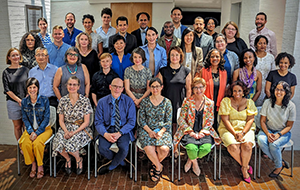
“To say the experience was awesome would be the understatement of the year,” said Terrell. “One entire month to focus solely on one’s scholarship, a private study at the National Humanities Center, full access to the Center’s library, staff and resources, weekly professional development workshops, and stimulating lunch chat-and-learn sessions with scholars from across the country—a professor’s dream.”
Terrell’s research views data from a four-year study of college students’ resilience and well-being from a humanities perspective. Her goal is to determine if she can find different patterns of religious change over time and if these different trajectories are related to resilience and well-being. She also used the data to determine if religious trajectories impact a college student’s experience of discrimination and other sociopolitical or cultural events.
Stukes worked with fellow computer science teaching professionals on responsible artificial intelligence curriculum design, with particular focus on how to prevent ways that AI can hurt individuals and society, such as through automated racism and bias.
“This project is important as it demonstrates an ongoing collaboration between the humanities and computer science as we develop curriculum around the creation, impact and possible harms of Artificial Intelligence-based technologies on humanity,” she said.
Bunzey has a long history with the research center. He served as a research assistant to a scholar and later reconnected with the center through his dean, who suggested he participate in the summer research residency.
“I used my time at the center to work on the first chapter of my book,” he said. “In this chapter, I argue that literacy is not used just as the ability read and write white conceptions of aesthetics. Rather, literacy is used as a mechanism of racial control and a measure of who ‘counts’ as a person, citizen and human in American society.”
While steeped in research pertaining to his book, Bunzey said the time he spent with fellow scholars and the opportunity to focus on what he is passionate about was invaluable.
The professors each enjoyed their time at the research center and are excited to bring what they learned back to the classroom for the benefit of their students.
“I’m excited about the opportunities this project will provide for my students to gain exposure to undergraduate research and the benefits of such experiences,” said Terrell.