

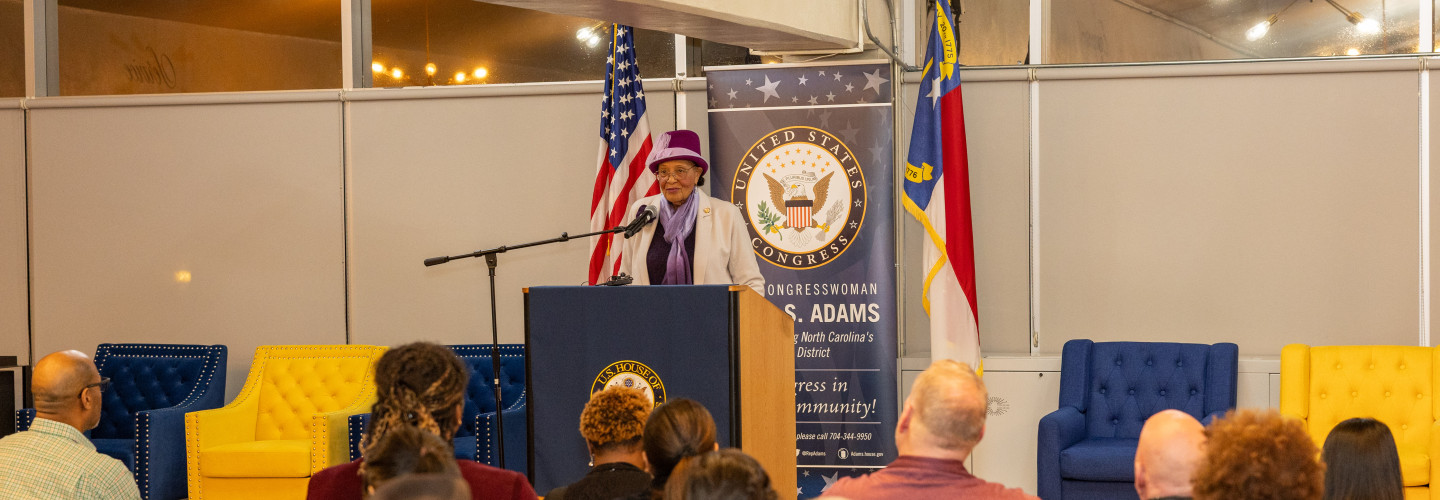
Charlotte, N.C. / January 29, 2026 - When Congresswoman Alma Adams stood before students, faculty, and community members at Johnson C. Smith University’s Grimes Lounge to deliver her State of the District Address, her message was both deeply personal and unmistakably urgent: education is the foundation of opportunity—and historically Black colleges and universities are among the nation’s most powerful engines of transformation.
Education as Opportunity
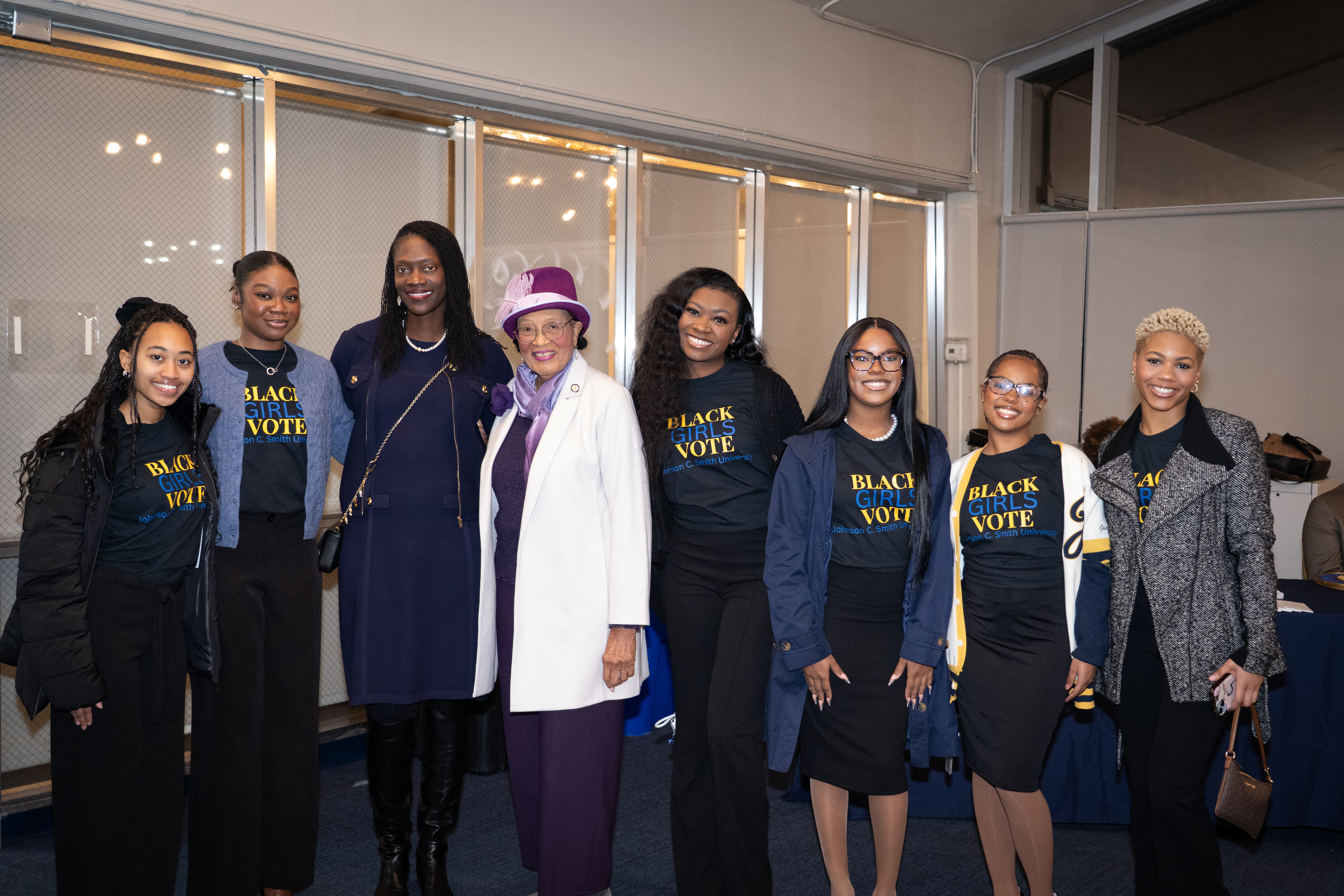
Adams, now serving her sixth term in Congress and recognized as the 100th woman sworn into the U.S. House of Representatives, spoke before a group of District 12 constituents, as a policymaker, an educator at heart, and an HBCU graduate who understands firsthand what access to education can change. A proud alumna of North Carolina A&T State University and The Ohio State University, Adams described herself as “HBCU strong—and unapologetic.”
That pride, she made clear, is rooted in lived experience. Adams shared that her mother worked as a domestic worker, cleaning floors so her daughter could pursue an education she herself was never afforded. Though Adams’ mother did not finish high school or attend college, her mother understood the power of education—and passed that understanding on.
“With education, there is opportunity,” Adams said. “And that opportunity changes everything.”
Throughout the State of the District Address, Adams emphasized that HBCUs, like JCSU, are not relics of the past, but vital institutions shaping the nation’s future—particularly for first-generation students. While HBCUs represent just 3 percent of four-year colleges and universities, they produce a disproportionate share of Black professionals nationwide, including half of all Black attorneys, 50 percent of Black teachers, and 70 percent of Black physicians.
Yet despite their impact, Adams warned that many HBCUs face decades of deferred maintenance and chronic underinvestment. National surveys indicate that approximately 75 percent of building space at public HBCUs requires major repair or replacement, with average deferred maintenance backlogs reaching $70 million for public institutions and $17 million for private ones. Many campuses are approaching—or exceeding—200 years old, including Cheyney University of Pennsylvania, the nation’s oldest HBCU.
“Our campuses are historic,” Adams said. “But they are still in use—and they need to be safe, modern, and equipped for today’s students.”
To meet that challenge, Adams outlined her IGNITE initiative—Infrastructure, Growth, New Infrastructure, Technology, and Education, a comprehensive effort to modernize HBCU campuses and expand technological and learning capacity. She also announced plans to introduce a new HBCU Excellence Bill, aimed at sustained federal investment in facilities, research, and student success.
Congresswoman Adams’ message was direct: imagine what HBCUs could do if they were fully resourced to match their proven outcomes.
Adams framed education, particularly at HBCUs, not as a stand-alone issue, but as inseparable from hunger, housing, and economic stability. She returned repeatedly to food insecurity—calling it one of the most urgent barriers to student and family success.
Hunger
In Mecklenburg County, nearly 12 percent of households are food insecure, affecting approximately 146,000 residents, with 50,000 people going to bed hungry each night. While many families qualify for SNAP benefits, Adams argued current support—about $6 per day—is simply not enough.
“No one should have to choose between feeding their family, seeing a doctor, and paying the rent,” she said.
Adams’ Closing the Meal Gap legislation would increase nutrition assistance while accounting for rising housing and medical costs—recognizing that hunger cannot be solved without addressing affordability more broadly.
That same principle guided her call for wage reform. Adams noted that the federal minimum wage has remained at $7.25 an hour for nearly 17 years, a stagnation she said no longer reflects economic reality.
“We should be talking about $25 or $30 an hour,” she said. “Affordability is the key.”
Health Care as a Basic Right
Health care, Adams emphasized, is not a privilege—it is a fundamental right. She highlighted progress in North Carolina, including the 2023 expansion of Medicaid to more than 700,000 residents and the extension of postpartum coverage to 12 months, benefiting hundreds of thousands of Black North Carolinians.
Still, warned that the United States continues to have the worst maternal health outcomes of any developed nation, with Black women disproportionately affected. To address that crisis, Adams plans to reintroduce the Momnibus, a comprehensive package of bills designed to reduce maternal mortality, expand the health workforce, improve data collection, and fund community-based care.
Community Responsibility
In closing, Adams challenged alumni, institutions, and policymakers alike to recognize their shared responsibility in sustaining opportunity. Education, she argued, requires collective investment—financial, civic, and moral.
“If you’re alumni, you have to send something back,” she said. “That’s how we keep the doors open.”
She also urged broader thinking about educational pathways, emphasizing that success may take many forms—from four-year degrees to two-year programs, from HBCUs to trade schools. What matters, she said, is access. If students in the district have access to education, it can be a pathway to dignity, stability, and possibility.
“With education,” Adams reminded the audience, “there is opportunity.”