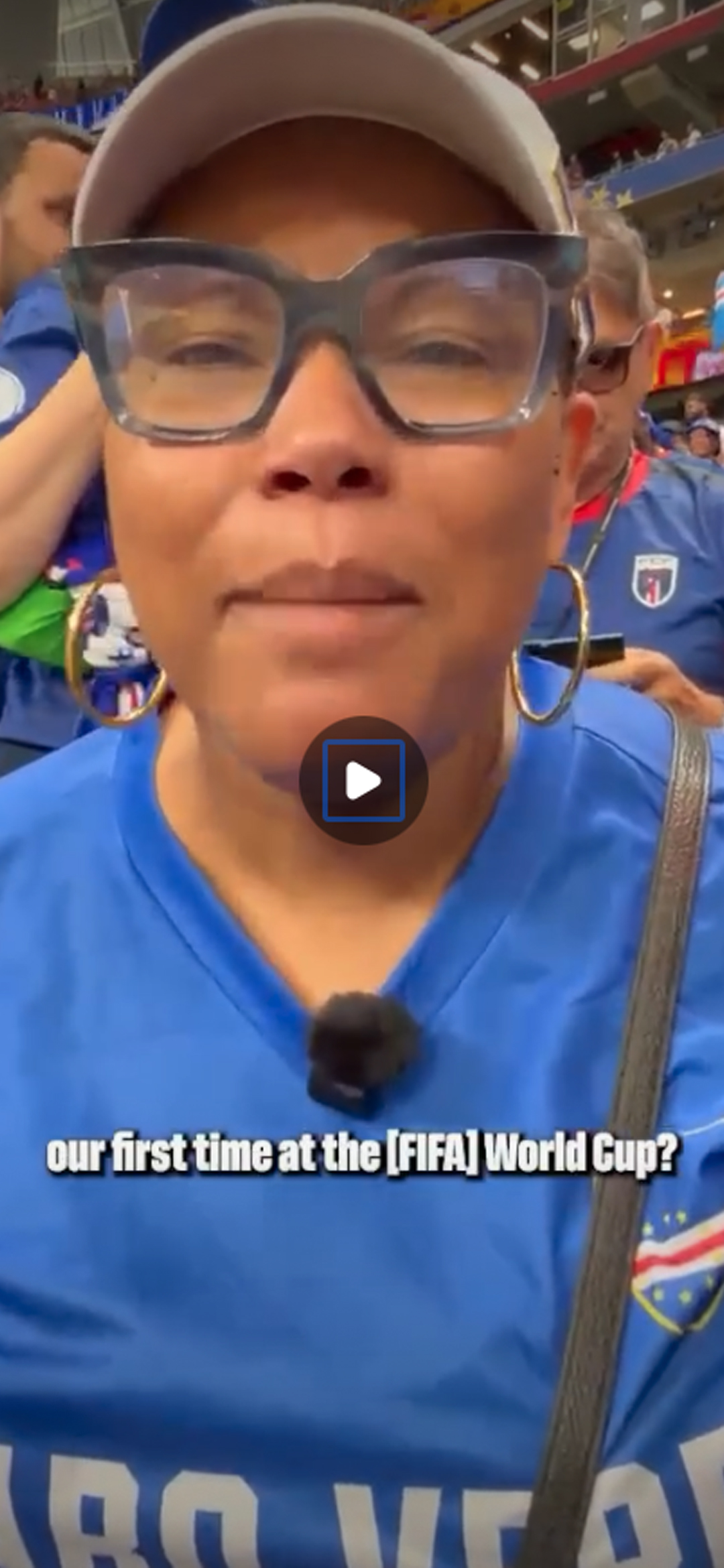
When Dr. Terza Lima Neves shed tears of joy during Cabo Verde's historic World Cup debut, FIFA cameras caught it all — and the world took notice.
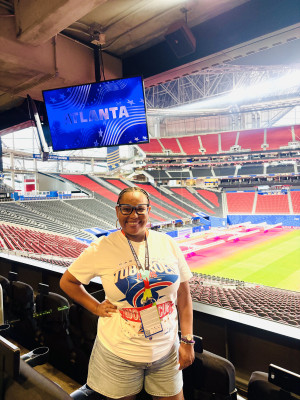
CHARLOTTE, NC JUNE 15, 2026 - It started with a national anthem, a giant flag unfurling across the pitch, and tears she couldn't hold back. For Dr. Terza Lima Neves — a political science professor and department chair at Johnson C. Smith University — the moment Cabo Verde took the field at their very first FIFA World Cup was more than a soccer match. It was history. And the world was watching.
What Dr. Lima Neves didn't know was that FIFA cameras were watching her, too. Footage of her tearful, joyful celebration in the stands quickly went viral on FIFA's official Instagram page, drawing thousands of shares across multiple languages and bringing global attention to both the small West African island nation and, quietly, to the HBCU she has called home for over 15 years.
"In that moment, I said to myself, 'man, I am so proud and privileged to be born a Cabo Verdean.'"
A Kriola, a Scholar, and a Proud Return
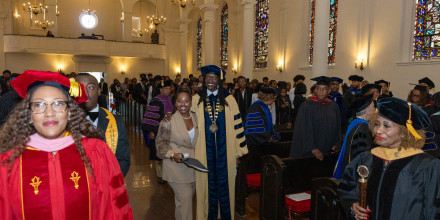
Born and raised on the island of São Vicente in the Republic of Cabo Verde, Dr. Lima Neves came to the United States as a teenager when her family settled in Pawtucket, Rhode Island — the heart of the Cabo Verdean diaspora. Her journey eventually led her to JCSU, where she has spent more than 15 years teaching courses in African, gender, and international politics. She currently chairs the Department of Social Sciences and Interdisciplinary Studies.
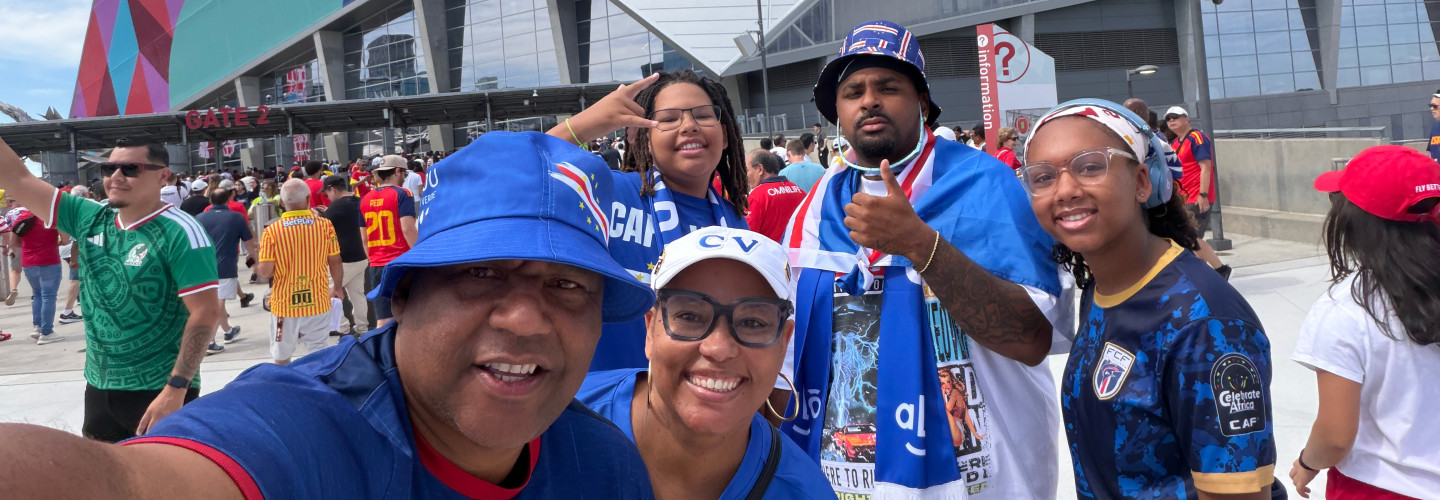
But her roots never left her. Her parents have since retired back to Cabo Verde. Her siblings remain there. Her husband Luis, whom she met on the islands, came to the U.S. when they married. Their children are the first American-born members of either family. Cabo Verde is not just a place — it is her people, her story, her identity.
So when she happened to be in Cabo Verde last fall for a government-hosted diaspora conference — the very moment the national team qualified for the FIFA World Cup for the first time ever — the emotion was overwhelming.
"The feeling cannot be put into words," she said. "From the moment I got off the plane in our capital city of Praia, the flag was on full display everywhere, car radios and horns were loud and people were in the streets dancing. For a small west African nation of just over half a million people, relatively unknown until yesterday, it was absolutely surreal." She noted that some have compared the historic achievement to Cabo Verde winning its independence from Portugal on July 5, 1975.
The Moment That Moved Millions
Fast forward to the tournament itself in Atlanta. Dr. Lima Neves was in the stands when Cabo Verde faced Spain — ranked No. 2 in the world. As the national anthem began and the giant flag was deployed across the pitch, decades of history, sacrifice, and pride rushed over her all at once.
"The significance of the historic moment, my grandmother Maria, our history, our struggles, including my own family's personal struggles of immigration — it all flashed through my mind and heart," she recalled. "I couldn't hold the tears. So they rolled down my face effortlessly."
She happened to be seated near the aisle. A FIFA representative was recording fans singing the anthem. After it ended, the rep told her: "You're about to be famous via FIFA." Dr. Lima Neves laughed it off — she didn't really believe it. By halftime, she was a phenomenon.
"My phone was in my pocket the majority of the match. I like to be in the moment," she said. "When I looked at my phone, I had so many messages from friends saying they'd seen me on TV. Then I opened my social media and couldn't believe it — thousands of people had seen and shared the video in several languages."
"JCSU has given me the space to be proudly and unapologetically, Kriola, African, and Black."
A Diplomat for Her Country
What fewer people know is that Dr. Lima Neves's presence at the game went far beyond being a fan in the stands. She served as the diplomatic lead for the Cabo Verde World Cup Welcome Committee in Atlanta — one of just five people responsible for coordinating the arrival of their community and, most critically, their President, José Maria Neves, and his official delegation.
"I was responsible for all things related to planning and communicating with Cabo Verde's government in anticipation of the arrival of our community in Atlanta," she explained. That included hourly communications with the President's chief of staff, chief of security, FIFA leadership, and local Atlanta government. She participated in high-level FIFA meetings and security walkthroughs at Mercedes-Benz Arena the day before the match.
"Serving my country in this capacity was hard work but a dream come true," she said. "As a Cabo Verdean, I see this as my responsibility and honor."
The JCSU Connection: A Long and Storied Bond
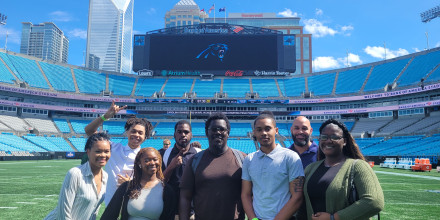
For those who know JCSU's history, Dr. Lima Neves' global reach is not an anomaly — it is a testament to the university's long-standing connection to Africa and the African diaspora. JCSU has welcomed former presidents, prime ministers, and first ladies from the continent over the years. In 2017, Ligia Dias Fonseca, the former First Lady of Cabo Verde, made an official visit to Charlotte and to JCSU's campus. Former Cabo Verde Ambassador to the United States Carlos Veiga followed in 2018. And in 2017 and 2019, Dr. Lima Neves traveled to Cabo Verde with JCSU students, experiences she says "changed their lives and professional directions."
"It made them want to travel more, especially to the African continent, and connect more to the homeland," she reflected. "I think we still have some work to do on being strategic with elevating and strengthening these connections."
JCSU, she says, has been the platform that made all of it possible: "This institution has given me the space to be proudly and unapologetically, Kriola, African, and Black."
"JCSU is a small HBCU in Charlotte. My country, Cabo Verde is a small west African island nation. We have lots in common. Let this moment inspire us to dream and act big."
Bringing the World Cup Back to the Classroom
As a political scientist, Dr. Lima Neves sees the World Cup as far more than a sporting event. She points to several stories from the tournament that she plans to bring directly into her courses on international and comparative politics.
She highlights Cabo Verde's goalkeeper Vozinha, who became a global phenomenon after making seven saves against Spain, the world's No. 2 team. After the match, Vozinha revealed he was emotional because his mother couldn't attend — due to a $15,000 visa cost imposed by the U.S. government at the last minute for citizens of many countries, including Cabo Verde.
She also points to Africa's referee of the year from Sudan, Omar Artan, who was denied entry at the U.S. border despite holding a valid visa — authorities cited alleged ties to terrorist cells. And to the entire Iranian national team, denied entry to the U.S. due to the ongoing war, and forced to remain in Mexico.
"The World Cup is supposed to be about comradery, coming together as one, and love for the game," Dr. Lima Neves said. "As a political scientist, these experiences by Black, African, and people of color make me think of the consequence of U.S. immigration policies, power relations, passport privileges, and xenophobia. These are discussions I am looking forward to infusing into my syllabi."
What JCSU Means to the World
When asked what she wants prospective students and the world to take away from seeing a JCSU professor on the global stage, Dr. Lima Neves didn't hesitate.
"JCSU is a space where people can find, define, and reinvent themselves if they really want to," she said. "It's a space that one can create lasting relationships. My former students have become friends and some, even colleagues. My colleagues are partners in creating beautiful programs for our students and community."
And with a simplicity that says everything: "JCSU is a small HBCU in Charlotte. My country, Cabo Verde, is a small west African island nation. We have lots in common. Let this moment inspire us to dream and act big."