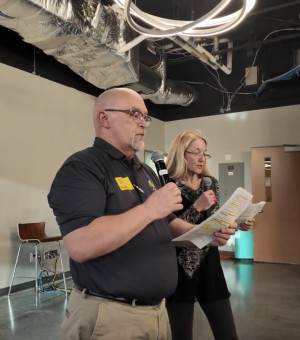
Dr. Mobley and Dr. Kistenberg co-hosting the Seder
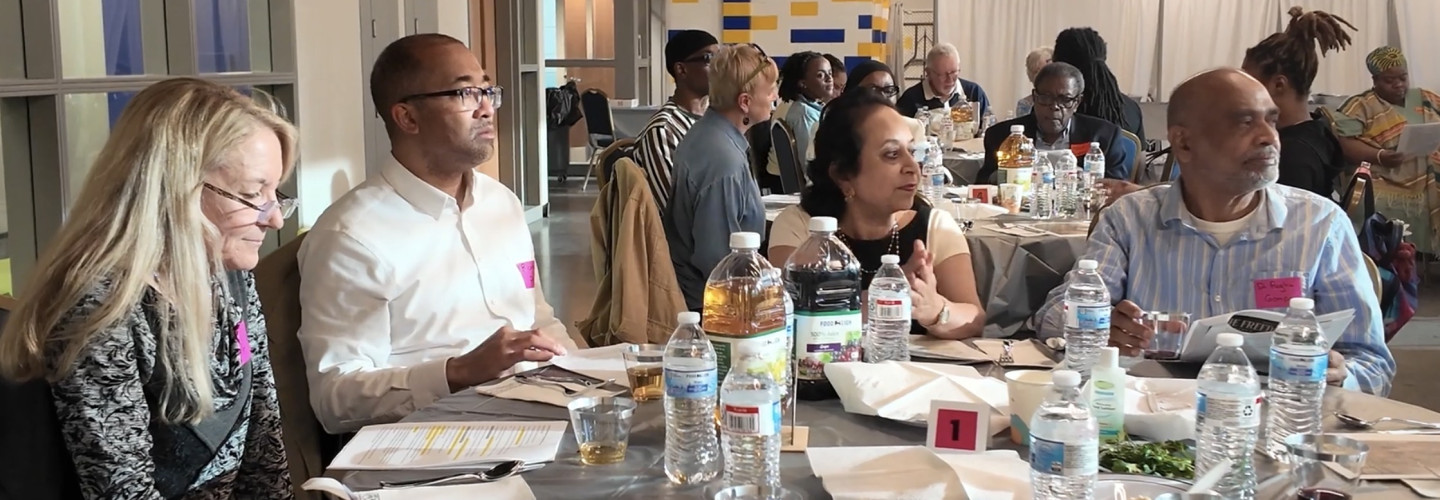
CHARLOTTE, NC/April 7, 2026 - A spirit of unity filled new Science Center’s Innovation Lab on the campus of Johnson C. Smith University on April 7, 2026, as a diverse group of faculty, staff, students, religious leaders and community members gathered for the Third Annual Passover Seder.
The traditional Jewish celebration brought together community members of the Jewish and the Christian faith and those from multiple ethnic groups and generations to take part in the traditional Jewish celebration. Guided by readings from the Haggadah—the foundational text that recounts the story of the Israelites’ liberation from slavery in Egypt—attendees engaged in prayers, songs and storytelling designed to pass the historical narrative from one generation to the next.
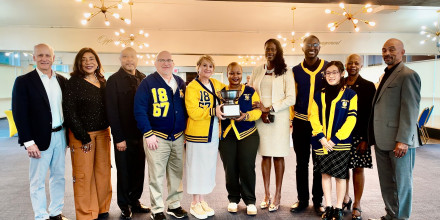
Dr. Kendal “Kip” Mobley, professor of religion, and Dr. Cindy Kistenberg co-hosted the Seder, alongside Rabbi Judy Schindler of Queens University of Charlotte and Rabbi Ya’aqov Walker of the Hebrew Family of Charlotte, a congregation of Black Jews. The gathering was supported by a Bridge Builders Charlotte grant Mobley secured during the COVID-19 pandemic to expand interfaith programming on campus.
“A Seder is a traditional Jewish ceremonial meal, usually held on the first and second nights of Passover, commemorating the Exodus,” Mobley explained. “The word ‘Seder’ means ‘order,’ and the meal follows a specific sequence, with symbolic foods representing parts of the story, along with prayers, songs and the retelling of that history.”
While traditional Seders take place during the opening nights of Passover, the JCSU event is intentionally scheduled later in the eight-day observance to allow Jewish participants to first celebrate with their families.
What began as a small campus gathering has steadily grown. “Our first Seder had approximately 15 participants—just JCSU students, faculty and staff,” Kistenberg said. “Each year, the Seder has evolved.”
This year’s observance was modeled as a “Freedom Seder,” inspired by a 1969 interfaith Seder created by Civil Rights activist Arthur Waskow. That version drew parallels between the Exodus story and the struggle for Black liberation during the Civil Rights Movement—connections that organizers say remain deeply relevant today.
“We have drawn parallels between Black enslavement and the Exodus story,” Kistenberg said. “Especially now, it is important to highlight the shared history of advocacy for civil and human rights.”
Mobley and Kistenberg emphasized that the event is rooted in experiential learning.
“As educators, our primary goal has always been education,” Mobley said.
“We believe in the power of experiential education,” Kistenberg added. “Participation in the Seder allows students to learn about Judaism while also reflecting on their own cultural and religious traditions. It helps deepen understanding of diversity and shared human experience.”
Organizers say the Seder also serves a broader purpose: strengthening relationships between communities.
“As walls between communities—especially Black and Jewish communities—continue to rise, we felt the Seder could help build bridges and re-establish ties that were so prominent during the Civil Rights era,” Kistenberg said.
Partnerships with the Charlotte Black/Jewish Alliance and the Hebrew Family of Charlotte helped expand participation and deepen the event’s impact both on campus and in the wider community.
“The participants mirrored the diversity that exists in our community in terms of age, race, ethnicity and religion,” Kistenberg explained. “It truly reflected the spirit of a Freedom Seder.”
By all accounts, the evening was both meaningful and memorable.
“We had a great time, enjoyed a great meal, and, according to our post-Seder survey, everyone learned something new,” Mobley said. “We celebrated, we reflected and we had fun. The feedback was very affirming, and we look forward to making it even larger next year.”
To support the 2027 Freedom Seder at Johnson C. Smith University, visit: https://johnson-c-smith-university.snwbll.com/jcsu-freedom-seder-fund.