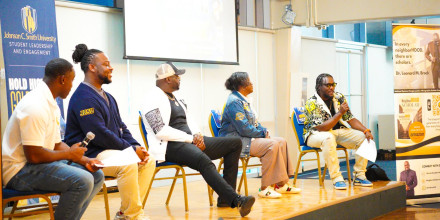
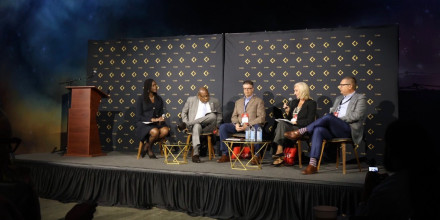
CHARLOTTE, N.C./March 23, 2018 – Johnson C. Smith University kicked off Black History Month with an exciting and engaging program Feb. 9, 2018 at the James B. Duke Memorial Library. Guests were treated to a discussion on the groundbreaking book, “Divine Kingship of Asante: A Model for Sustainable Development of Self and Community,” by Dr. Ur Aua Hehimetu Ra EnKamit. The author spent years compiling the work, which studies the ways in which the traditional model of Asante kingship in Ghana offers a sustainable blueprint to improve the quality of leadership for disenfranchised communities worldwide. It was a powerful presentation on how our history can provide a pathway to a greater future. Additionally, guests enjoyed food, an African-style marketplace for cultural jewelry and other items, drumming, dancing, and jazz music by A Sign of the Times. Proceeds from the donation-based event went toward building JCSU’s MakerSpace, an interactive lab where patrons can access cutting-edge technology such as 3-D printers and CAD design to bring their ideas to life.
March 23, 2018